
Of course, Ibanez – the famous Japanese guitar manufacturer – is widely known. But the origin of the brand name and the history of the luthier from which it originates is less known.
Please continue reading when you’re interested in finding out more about the history of the man whose name is on all our beloved instruments. The man without whom, we might not even be playing an Ibanez nowadays.
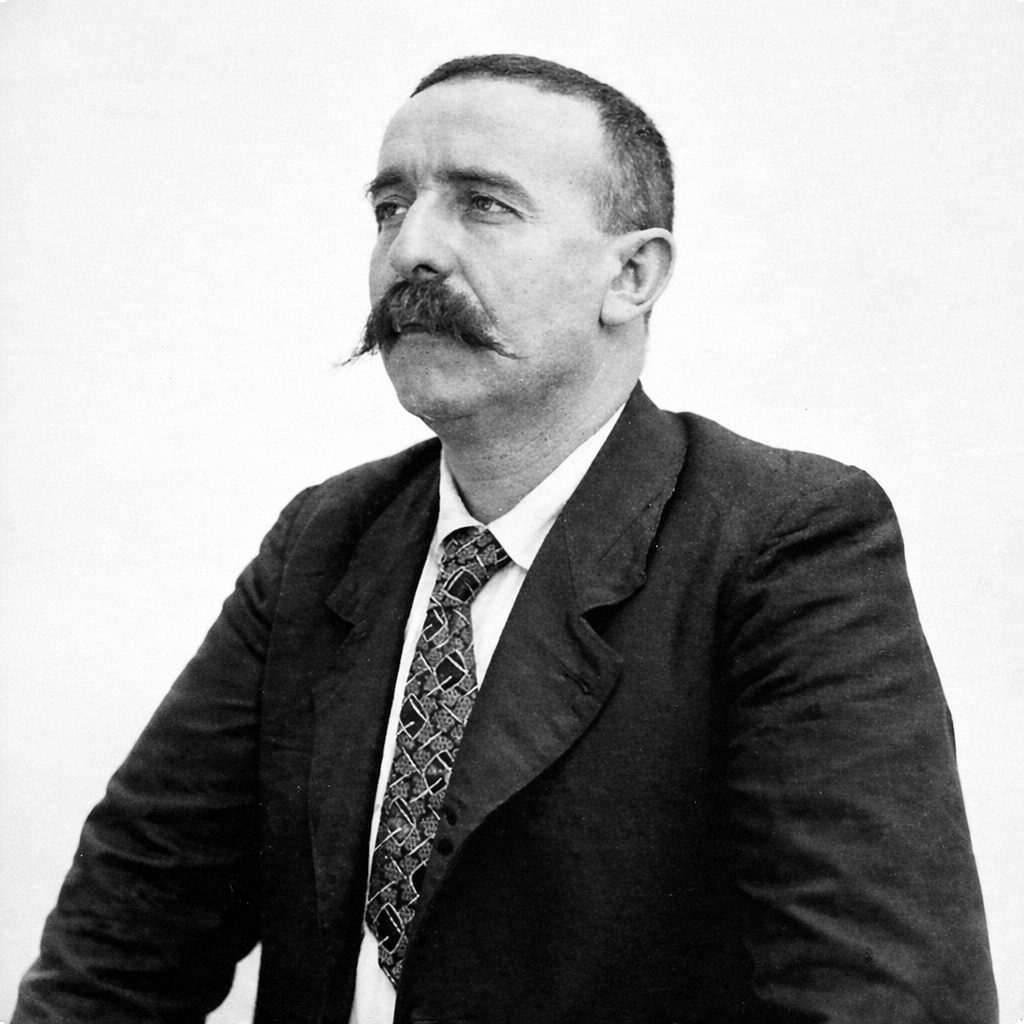
Salvador Ibáñez Albiñana (Barcelona, 1853 – Valencia, 06-10-1917) was a Spanish luthier who was active in the late nineteenth and early twentieth century in Valencia, Spain.
Salvador started with a small workshop and from there, he slowly built his business into the largest guitar factory in Spain; producing some 36.000 guitars a year and employing over 100 people.
According to the ‘Diccionario de Guitarristas‘ (page 374) written by Domingo Prat in 1932, Salvador’s factory was ‘the largest guitar factory in Spain’, headed by a ‘man of strong character and determination who from his youth profitably monopolized the activities of his colleagues’.
So … it is of no surprise that Salvador Ibáñez became one of the most important people in the Spanish guitar industry and that he dominated the complete market.
The instruments that Salvador Ibáñez produced were considered to be the finest of their time; they were prized for their exceptional quality, innovative designs and impeccable craftsmanship.
Ibáñez guitars, being of Valencian design, were more ornate than the Madrid designed guitars. The lines were not as delicate, but like many Valencian guitars, they were easy to finger and produced a fair sized and pleasant sound. Due to this and due to their moderate price, they were very popular with guitar students.
Although Salvador shared the market with other Valencian luthiers, he particularly distinguished himself by his constant drive of innovating the guitar; a tradition that is carried on by the current Ibáñez company in Japan.
Salvador did not actually invent the process, but we do know that he – together with fellow-luthiers Francisco González and José and Manuel Ramírez – is one of the first in guitar making history to arch the top of a guitar.
Even though American luthier Orville Gibson is generally credited as the first to carve the top and back of a guitar into an arched shape – first applying the process to mandoline and patenting it in 1898 – it is certain and proven that Spanish luthier Juan Moreno of Madrid arched the tops of a guitar in 1830. See page 81 & 82 of the research ‘Antonio de Torres, Guitar Maker – His Life & Work‘ by José Luis Romanillos.
In this document the researcher also notes that it is very likely that Salvador Ibáñez was influenced by Juan Moreno’s process of arching the top of a guitar.
Salvador made six-, nine- and twelve-string guitars and some other stringed instruments, like bandurrias, lutes, ukuleles and mandolins as well as the necessary gut and steel strings and tuning machines for these instruments.
Apparently, in his first ten/fifteen years as a luthier and before his workshop became a factory, Salvador was building guitars by himself. And he likely had an apprentice (or several). At the same time, Salvador must have been quite productive because he allowed himself to conduct experiments that were very advanced for the time.
In 1897 he built the Terraza Resonador; a guitar with a double soundboard which was invented by Carlos Terraza. See also vintage-guitar-world.com/en/guitar/terraza-resonador-1898.
Also in 1897, Salvador built a guitar with a double neck. Presumably, he was the first luthier in the world that built such a guitar.
Check: He also made guitars with detachable necks.
Check: In 1897 he built one of the world’s first double-neck guitars.
Check: advertising on lauds, violins, strings, accordions, tambourins, castanets, ocarinas, etc.
Salvador Ibáñez had many apprentices and among those who were trained by or worked for him were Andres Marin (1858-1928 who became really famous – especially in South America), Salvador Gaspar García (1874-1942) Rafael Vivo and Blasco.
Salvador Ibáñez was married to Dolores Salavert Bataller (Cartagena, 1855 – Valencia, July 24, 1920) and they had two sons: Vicente (1882 – 1959) and Salvador (1887 – April 10, 1967), who both joined their fathers company in 1910.

Timeline
In 1865 – at only eleven years of age – Salvador Ibáñez arrived in Valencia from Barcelona. Apparently by chance he began working as an apprentice luthier in a workshop at Calle de la Muela 23. In this small workshop, he honed his skills and learned the traditional methods of guitar making.
The fact that Salvador was already registered as a guitar maker at the age of eleven does not necessarily mean that he was already actively working at such a young age, but rather that a relative rushed to register him as a guitar maker in case of future opportunities. This practice is explained by Romanillo’s in the aforementioned article, although he is referring to guitar makers in Madrid from the early 18th century.
In 1870 – after a few years of apprenticeship – Salvador started his own company: Salvador Ibáñez y Albiñara at Calle de la Cubells 11. Salvador started his own company not because he wanted to, but because he basically had to. At only 16 years of age, he had to take charge of his home and become a professional luthier, because his mother – Magdalena Albiñara y Magraner from L’Olleria, Valencia – became completely blind at the age of 36 years. Salvador also had to take care of his 10-year-old brother José Ibáñez.
In little more than a decade – while he was still a young luthier – his name resounded among the powerful Valencian guitar industry, which at that time was the biggest and most important in Spain. Salvador quickly gained a reputation as a talented luthier and he was soon in high demand by instrument dealers and musicians all across Spain.
Both aforementioned streets – Calle de la Muela 23 and Calle de la Cubells 11 – were home to more Valencian luthiers and were very close to the Nuevo Mercato (Central Market). This location was convenient because visitors would pass the workshops when visiting the market.
Check: 1880 Calle de la Jordana 32
Before Salvador moved his workshop to Calle de Ruzafa 8 in 1885, Salvador was registered at Calle Baja 34, where apparently he worked together with fellow luthier Adolfo Obiol Uliche.
Check: In 1888 he first appeared in trade guides at Calle Jordana and from 1892 at Calle Ruzafa; from 1896 to 1927 his workshop was located at Bajada de San Francisco 23.
In 1910 both of Salvador sons Vicente and Salvador joined the company. Because of this, the name of the company was changed into Salvador Ibáñez é Hijos (Salvador Ibáñez and Sons). This name was kept in use after Salvador passed away in 1917 and as such it became a trade name.

From 1915 the company used 2 addresses: a workshop at Bajada San Francisco 23 (a most lively street in Valencia which was also home to Salvador’s two main competitors, Andrés Marín and Telesforo Julve Jordán) plus their new facility at Padre Rico 6, which provided an additional production area of 900m². Unverified sources state that the company produced some 36.000 instruments per year, that were built by more than a hundred people employed by the company. The Salvador Ibáñez é Hijos company also exploited a workshop in the prison of Valencia, which was a common practice for Valencian businesses in those days.
When Salvador passed away in 1917 his company continued to be managed by his two sons – each of them specializing in an activity; Salvador in the workshop and Vicente in commercial relations – until it was sold in 1933 to Valencian luthier Telesforo Julve Jordán.
Note that their new label does not state an address. At that time it was known for some years that the Bajada San Francisco had to disappear in favor of the transformation and expansion project of the Emilio Castelar square. The street and its buildings were to be demolished to make way for new buildings and the bigger square in front of the new Town Hall.
Before the demolishing began in December 1928, the brothers Ibáñez had already left the Bajada San Francisco in 1927 to concentrate their production at the Calle Padre Rico facility only. The exports at that time were mainly to the Hispano Americas, Philipines and Japan.
Great Depression
In 1929 the Great Depression hit the world economies hard. Although Spain didn’t suffer too much from this, the Hispano Americas (and thus the clients of Ibáñez) definitely did. The result of the recession had a devastating effect on the progress of the business due to the accumulation of debts in the American markets. Specific export products of Spain were hit and it is believed that the Ibáñez brothers suffered too. Therefore they had to cut production and lay off a lot of the people that worked for them.
Seeing themselves end up in this situation, the Ibáñez brothers were eventually forced to liquidate their company and cease the activity of their factory. However, they kept the building they owned at Calle Padre Rico 6, which is preserved to this day.
Below you can see the building at Calle Padre Rico in the photos that I took on December 31, 2025. In the photos you can clearly see the word ‘Ibáñez’ on top of the building.


Seven of the Ibáñez-luthiers started working for Telesforo Julve Jordán in 1931. Among them were: Federico Pau, Ernesto Lisart García and Salvador Blanch. They were among the best luthiers in Valencia at that time, constructing the high-end instruments for Julve in the years to follow. From 1931 Julve processed all orders of Ibáñez.
In December 1933 Vicente Ibáñez confirms the take-over of their business by Julve and in January 1934 they stopped their business. However, from the Ibáñez family, it is known that the brothers carried on with repairs and sales of musical instruments.
The letters below show the transfer of the business from both Ibáñez and Julve.


The text from the letter from Ibáñez translates into the following:
“Dear Sir: We hereby inform you that, by virtue of a contract entered into with the guitar maker of this city, Mr. Telesforo Julve Jordán, on this date, we have transferred our guitar factory to said gentleman, who retains our stock of manufactured instruments, as well as the large stock of special woods for this manufacture.
At the same time, Mr. Julve has taken on all our old and competent workers as employees, so he will be able to continue supplying our products with the same quality that we have always provided.
Also, by virtue of the contract we referred to earlier, Mr. Julve is authorized to place our renowned brand on the instruments he manufactures, either at the request of customers or at Mr. Julve’s own discretion.
For all the above reasons, we do not hesitate to recommend Mr. Julve to you so that you may entrust him with your valued orders in the future, with the assurance that you will be satisfied and that you will not notice any difference whatsoever in the quality of the instruments, which will surely be the same as those we have supplied to you until now.
The liquidation of the assets and liabilities of this company is our responsibility.
With thanks for the trust you have honored us with for so many years, we remain yours truly.
Signed by Vincente Ibáñez e hijos“
The text from the letter from Julve translates into the following:
“Dear Sir: From the preceding letter from Mr. Salvador Ibáñez and Sons of this city, you will have learned that on this date, and by virtue of a contract I have made with these gentlemen, I have taken over the old guitar factory of which these gentlemen were the owners.
From the aforementioned letter, you will realize that I am in a special position of superiority over my competitors, since I have reinforced my workshops with all the workers who made up the factory of Mr. Ibáñez.
For all the reasons stated above, I take this opportunity to offer myself to you with the assurance that I will give you my usual attention so that you are completely satisfied with those requests that you honor me with your trust.
With thanks in advance, I take this opportunity to offer myself respectfully to you. Yours truly.”
So, Julve took over all assets and liabilities from the Ibáñez brothers and incorporated those in its own enterprise. Julve also acquired the right to use the Salvador Ibáñez é Hijos label for his guitars and Julve still used those Ibáñez labels in 1944. Therefore guitars labeled as ‘Salvador Ibáñez é Hijos’ are difficult to date.
NOTE: the Ibáñez brothers sold guitars to Japan but they did not sell their company or any trademarks to any Japanese company that imported their guitars.
The workshop was completely destroyed during the Spanish Civil War (1936-1939) in a bloody street fight, which cost the lives of many of the people that worked for Julve / Ibáñez.
After the workshop had been destroyed and with the Salvador Ibáñez guitars not being available (and yet still very much sought after due to their excellent quality), Japanese distributor Hoshino Gakki decided to start making Ibáñez guitars of their own after years of importing them to Japan. They first named their self-produced guitars ‘Ibáñez Salvador’ but later dropped Salvador’s first name and the guitars were named Ibanez.
Addresses
During its existance the Salvador Ibáñez (é Hijos) company was associated with the following addresses:
1865: Calle de la Muela 23
1870: Calle de Cubells 11
1880: Calle de la Jordana 32
<1885: Calle Baja 34
1885: Calle de Ruzafa 8
1896: Bajada de San Francisco 23 & 27
1910: Bajada de San Francisco 23, Calle del Hospital 16 & Calle del Pilar 13
1915 Bajada de San Francisco 23 & Calle de Padre Rico 6
1927 Calle de Padre Rico 6

For all locations on a current map, please see google.com/maps/d/viewer?mid=1e0Wn-84BtVV5JpLsGINQInsa39nJAyE
Japan Connection
Both Ibáñez and Julve were doing business with Japanese clients. From the take-over year (1933) these companies ordered their Salvador Ibáñez guitars from Telesforo Julve. In total Julve may have shipped some 1000 Salvador Ibáñez guitars to Japan. Julve guitar supplies discontinued at the start of the Spanish Civil War in 1936.
Hoshino did not buy the brand name “Salvador Ibáñez é Hijos”, but instead, Hoshino labelled with a slightly different name “Ibanez Salvador”, avoiding trade mark problems. The Hoshino/Ibanez guitars encountered on the internet all are post WW2.
Because of the demand in for Spanish guitars Japan and the interrupted supply, Hoshino found a solution by organizing local Ibanez production. They honored the names of two forerunners of stringed instruments from Europe: Rafaelle Calace and Salvador Ibáñez. They both appear on his guitar labels.
According to the book ‘Ibanez – The Untold Story‘, Hoshino started importing the guitars produced by Ibáñez in 1929. So, it makes perfect sense that the name Hoshino isn’t in the clients register of Salvador Ibáñez from ~1915.
Unfortunately, there is no tangible evidence left from the Hoshino side; all Hoshino archives were destroyed in the Second World War.
The sound of the guitar here above is absolutely astounding. We die a listening test, this guitar was compared in the same room with some modern hi-tech guitars. We were so much surprise when it was first played, it was every bit the equal in volume and projection as any of these modern improvements and far more interesting to listen to in terms of color and nuance.
The guitar has a great richness and harmonious quality. The notes blend together beautifully and yet maintain their clarity and separation. The sensation of playing the guitar is as it vibrates against the players body in a very deep way.
It has an incredibly powerful sound and sounds very much like what we know from Torres.
The guitar is in a lightly restored and well playable condition. The scale lenghts is 645 mm and the nut width 52 mm. The top is of fine alpine spruce and the back and sides of very beautiful and high quality rosewood.
This guitar was made when he still had a small workshop at Ruzafa 8. This guitar has been restored and is in excellent, playable shape and rewards the player with a sensitive, colorful palette of rich sound.
This instrument displays the ornementation typical of this luthier’s work at the end of the 19th century. The sound is woody, deep and silky, the notes are vibrant with the expressiveness and sensitivity that make the charm of Spanish guitars of this period.
Julian Bream has played serveral guitars made by Salvador Ibáñez guitar. See julianbreamguitar.com/biography-1933—1949.
Eric Clapton has owned several original Salvador Ibáñez guitars, one of which was sold at a benefit auction in 1999 obtaining a final price of US$ 48.300. See also christies.com/en/lot/lot-1526038.
Regarding history it is curious to discover that the first quality guitar played by Francisco Tárrega was a Salvador Ibáñez before he switched to the Torres guitar. Below is a photo of Francisco Tárrega with a Terraza Resonador built by Salvador Ibáñez in 1897. See also vintage-guitar-world.com/en/guitar/terraza-resonador-1898.

Below you can see a video of the Terraza Resonador being played.
Salvador Ibáñez died on October 6, 1917. Below you can see the announcement of Salvador’s passing in the (evening) newspaper ‘La Correspondencia de Valencia’ from that same day. Click here for the full newspaper in pdf format.


The Spanish text in the announcement translates into the following:
The gentleman Don Salvador Ibáñez Albiñana – industrialist – has passed away, at six in the morning at the age of 64.
His inconsolable wife, Doña Dolores Salabert, sons Don Vicente and Don Salvador, daughters-in-law Doña Maria Mompó and Doña Amparo Canet, grandchildren, brother (absent), nephews and other family members and the business entity Salvador Ibáñez é Hijos, share with their friends this sad loss and ask them to attend the funeral procession, which will take place tomorrow, at ten o’clock, from the mortuary house, Calle Padre Rico, S I H (cross street of Calle Fresquet), for which they will be grateful.
No obituaries are distributed.
The Spanish text in the obituary translates into the following:
A very popular industrialist, who knew how to raise the name of Valencia in his industry to the level it deserves, a friendly and companionable man to everyone, has passed away this morning. He is Don Salvador Ibáñez Albiñana. The news of his death will cause general consternation.
We still see him in Bajada de San Francisco, at the door of his establishment, smiling and affectionate. A good citizen, he knew how to dedicate his affections to his home and his small homeland. For these qualities, he won the sympathies of those who treated him, and today they mourn his death.
May the deceased rest in peace! May his disconsolate family receive our most sincere condolences.
Unfortunately his grave has been cleared. But his legacy continues to this day. Even after more than a century, his instruments are still very much sought after by musicians and collectors because they are widely considered to be some of the finest instruments ever made.
Salvador Ibáñez is remembered as one of the greatest luthiers of all time. And his contributions to the world of music have had a lasting impact.